
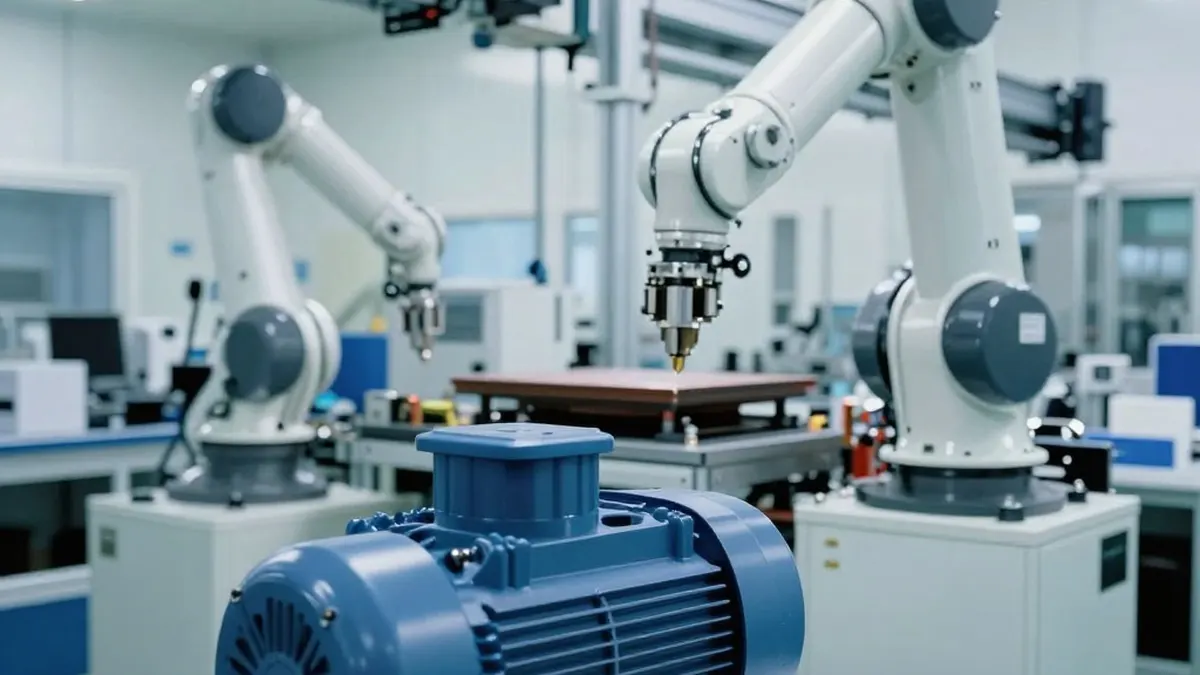
TSMC, the world's largest contract chip manufacturer, is looking for factory equipment that does not rely on rare-earth materials, in an effort to shield its operations from China's export controls. Reuters reported on October 22, citing people familiar with the matter, that the Taiwanese company has started asking its equipment suppliers whether they can deliver automation machinery fitted with motors that do not need rare-earth components.
The company makes the powerful Nvidia chips that underpin the AI boom, along with chips for Apple, Broadcom, Qualcomm and many other technology and automotive firms. Its large, highly automated fabrication plants depend on industrial machinery driven by electric motors with strong permanent magnets made from rare-earth elements, including neodymium, dysprosium and terbium.
China's grip on this supply chain is considerable. The U.S. Geological Survey says the country accounts for roughly 70% of global rare-earth mining. The International Energy Agency says China also controls about 90% of refining and around 95% of the finished permanent magnets of the kind used in TSMC's equipment.
Beijing placed seven medium and heavy rare earths, and the magnets made from them, under export controls in April 2025. Exporters must seek case-by-case approval and licenses, which has restricted shipments to manufacturers in the U.S., Europe and Asia, TSMC among them.
China widened the controls on October 9, 2025, to cover five more rare earths, processing technology and equipment, and even products made outside the country that contain more than 0.1% Chinese-origin rare earths or that are produced using Chinese processing technology. It later suspended that expansion for one year, until November 10, 2026, and the suspension has now been extended by a further 90 days.
TSMC's outreach is intended to lower the risk that the restrictions will interfere with production. Even with every other raw material and machine in place, a shortage of specialized motor components could complicate the maintenance, repair or expansion of its production equipment.
Several motor designs can avoid rare-earth magnets. Conventional induction motors produce torque through electromagnetic induction rather than permanent magnets, switched-reluctance motors are another route, and some permanent-magnet motors can use ferrite magnets instead. These alternatives generally come with different trade-offs in efficiency, size, power density, precision and control requirements.
Elsewhere, governments are slowly working to build rare-earth supply chains outside China. Taiwan is reportedly pursuing domestic rare-earth production in cooperation with the United States, and both have confirmed their intention to cut reliance on Chinese rare-earth and critical-mineral supplies. Taiwan's government is backing the Industrial Technology Research Institute in setting up a pilot production line within three years that could meet about 50% of the island's domestic rare-earth demand.
The U.S. says it is "working with Taiwan and other partners to develop alternative sources of supply, expand processing capacity and build more resilient supply chains," according to the report. In February 2026, the Trump administration announced plans for a $12 billion critical minerals stockpile to offset supply risks from China.