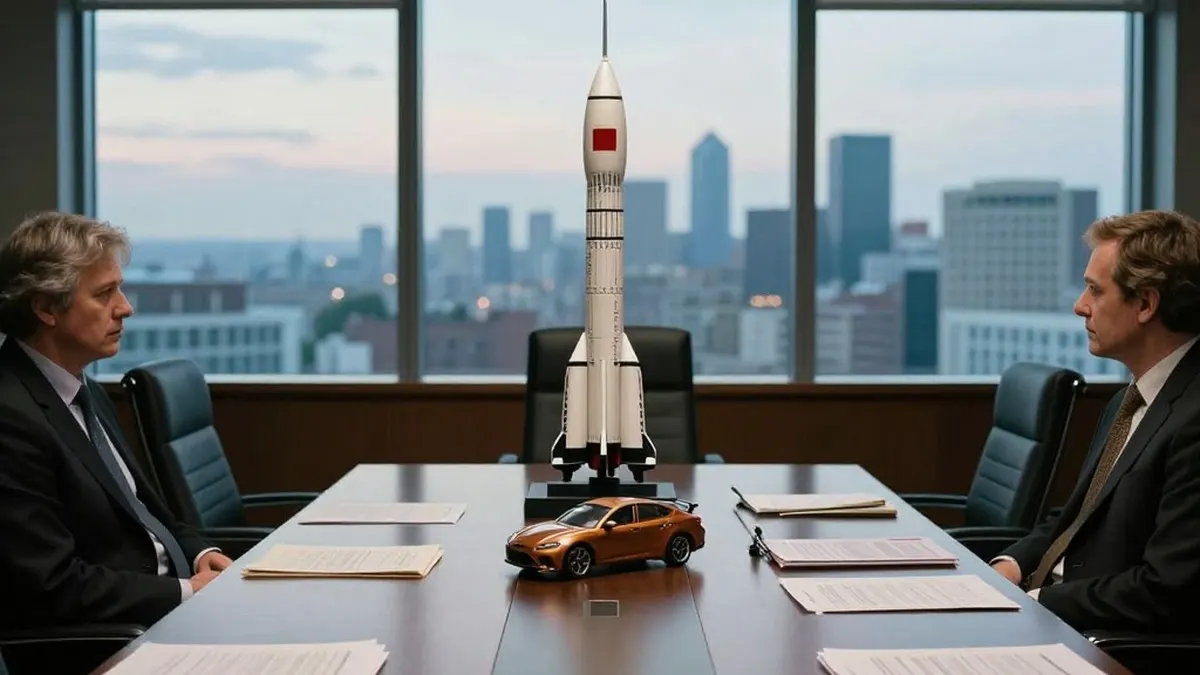
Tesla and SpaceX have each created a special board committee to explore a possible merger, according to Elon Musk, who is chief executive of both companies. Musk disclosed the move during SpaceX's quarterly earnings call on October 20.
He said the committees are made up of independent board members. The call came only a few months after SpaceX went public and was the company's second quarterly report as a listed business. Merger speculation has circulated for some time, and the committees are the first formal step toward a deal.
The review does not guarantee a merger. The independent directors must first decide that a combination is worthwhile, and shareholders of both companies would then have to approve it. Musk is not officially permitted to take part in the committee discussions, and neither are directors who are not considered independent, such as his brother Kimbal Musk. Musk has still said publicly that he favors a merger, arguing on the call that "we are pretty much in the superintelligence singularity."
The shareholder votes would play out differently at each company. Musk controls more than half of SpaceX's voting shares, so approval there is effectively in his hands. At Tesla, a merger would need support from 50% of all outstanding shares, not merely half of those cast. Musk's stake in Tesla is around 22% following the reinstatement of his pay package.
Tesla has also prepared an "auto-vote" procedure that lets shareholders instruct that all their shares be voted in line with board recommendations. Tesla has a larger share of retail investors than most large companies, and retail holders tend to vote in smaller numbers, so such a mechanism could raise turnout.
Electrek, which first reported on the development, argues that the merger would carry additional consequences because of Musk's pay arrangements. It says the Tesla package, which ties stock awards to goals such as delivering a million robots and a million robotaxis, includes a provision that delivers the shares automatically if the companies merge. It says the SpaceX package, which is linked to putting a million colonists on Mars, works the same way. If so, Musk would receive his stock regardless of operational milestones, and other shareholders would be diluted.
The potential effect extends beyond direct shareholders. Tesla and SpaceX are among the largest US companies by market value and are held in major stock indices, so many retirement funds have exposure to them. Electrek notes that SpaceX was added to the Nasdaq 100 days after its IPO, after the index rules were changed. A merger that gave Musk a larger share of the combined company would dilute the value of other investors' holdings, including those in retirement plans.
Electrek also points to an earlier precedent, Tesla's 2016 purchase of SolarCity, a solar startup founded by Musk's cousins Lyndon and Peter Rive. The deal was pitched alongside Tesla's solar roof tiles, which never reached the market in significant numbers. Tesla discontinued the product in August this year.