Swedish heavy truck maker Scania is accelerating its move into electric trucks in China, where demand for battery-powered freight vehicles is rising faster than the company anticipated. Record fuel prices linked to the conflict involving Iran are cited as a factor behind the quicker shift in the world's largest freight markets.
According to Scania Chief Executive Officer Christian Levin, the company will begin making battery-electric trucks at its new assembly plant in Rugao, China, as soon as it receives the required license. Levin spoke in an interview in Södertälje, Sweden.
Levin said he expects electric trucks to make up half of the Chinese market by the start of 2027. "We have had to speed up those plans," he said. He acknowledged that obtaining licenses in China is typically a complicated process, but said that this time it "has moved much faster than we could have imagined."
The market data point in the same direction. Sales of electric semi trucks in China climbed almost 80% in the first half of 2026 compared with the same period in 2025. They are on track to represent more than 30% of all heavy trucks sold in the country this year, and the pace of growth is increasing.
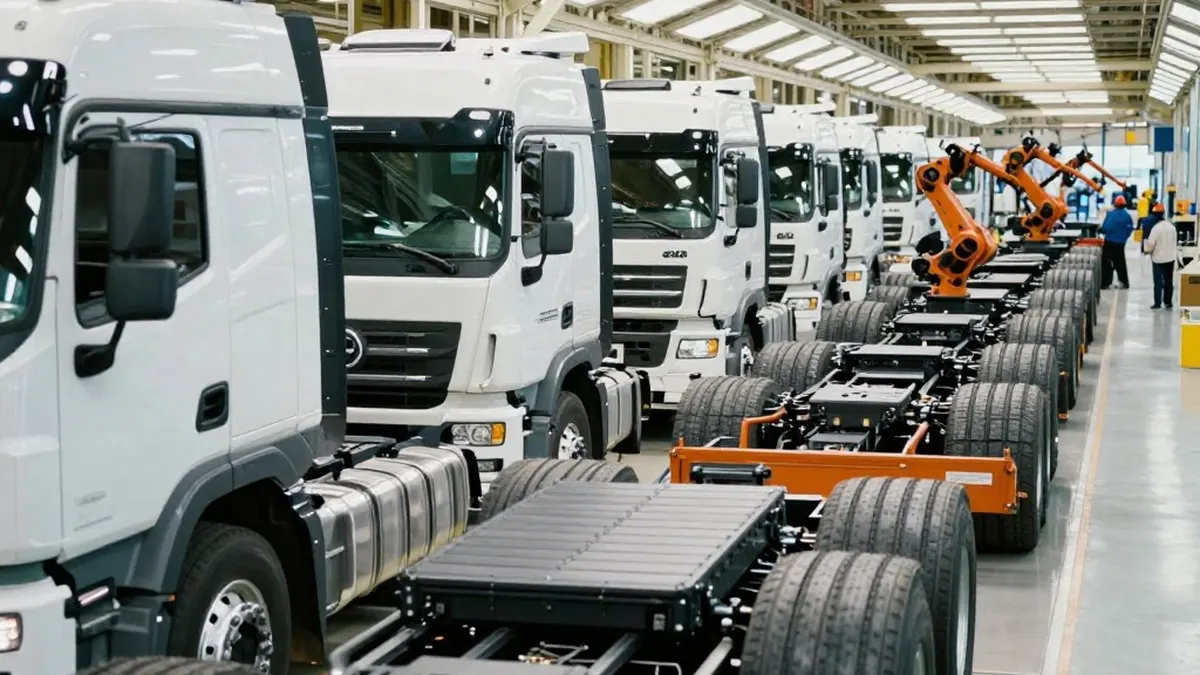
Scania completed the Rugao plant last year. It is the first wholly owned factory in China for Traton Group, Scania's parent. The facility is intended to supply China as well as other Asian markets, and its assembly lines are able to produce both conventional diesel trucks and battery-electric models.
Levin also pointed to the infrastructure behind China's rapid adoption. "It is happening quickly and that's incredibly fascinating," he said. In his view, it indicates that Chinese authorities and industry have found a way to expand charging infrastructure and the power grid. He described that as the biggest challenge in many countries around the world, Europe included.
For Scania, the Rugao plant's flexibility allows it to respond to a market that is changing quickly without committing exclusively to one drivetrain. The timing of the license will determine when electric production can begin at the site.