On Oct. 21, 2008, the Indian Space Research Organisation (ISRO) sent its first spacecraft to the moon. The mission, called Chandrayaan-1, combined an orbiter with an impactor and marked the agency's first venture into deep space.
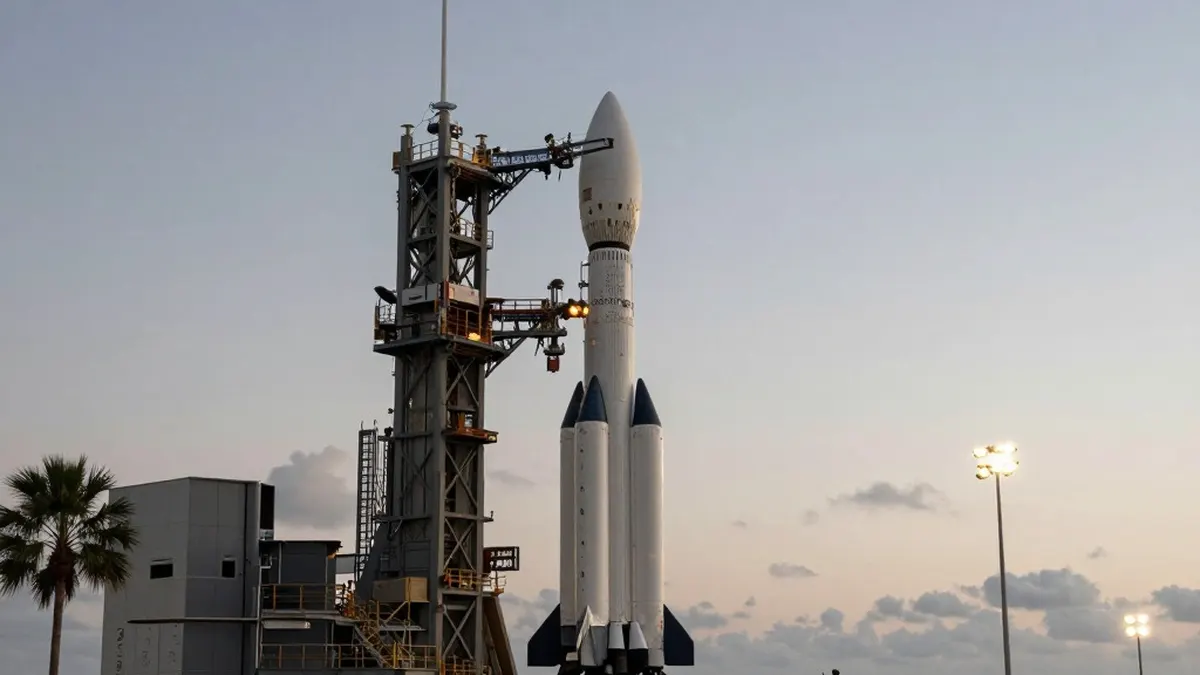
The spacecraft lifted off from the Satish Dhawan Space Center aboard an Indian rocket, the Polar Satellite Launch Vehicle, known as PSLV-XL. The launch took place at 8:52 p.m. EDT, which was about 6:22 a.m. local time at the launch site on Oct. 22.
Roughly three weeks later, Chandrayaan-1 reached lunar orbit and released the Moon Impact Probe, which struck the lunar surface on Nov. 14. The remainder of the spacecraft stayed in orbit and gathered data on the moon, sending it back to Earth for about a year. According to NASA, the orbiter entered lunar orbit on Nov. 8, 2008, and remained there until contact was lost in August 2009.
The mission ended earlier than intended, with scientists losing contact with the spacecraft 14 months ahead of schedule. The most likely cause was a power supply failure brought on by overheating. NASA noted that this fell short of the planned two-year lifetime, though ISRO said at least 95% of the mission's objectives had been achieved by then.
The stakes were high for the agency. Chandrayaan-1 was India's first mission to the moon, from a country that hopes to launch its own crewed spacecraft and build a space station. Beyond showing that India could send a probe to the moon, it produced notable science, including evidence of water on the moon.
NASA's mission overview said that in September 2009, scientists published results from the American M3 instrument, which had detected absorption features in the moon's polar regions "usually linked to hydroxyl- and/ or water-bearing molecules."
The spacecraft carried 11 instruments, five of them built by ISRO. The others were experiments for the European Space Agency and NASA. NASA said that besides the five Indian instruments, the spacecraft carried scientific equipment from the United States, the United Kingdom, Germany, Sweden and Bulgaria.
India's lunar ambitions continued well beyond Chandrayaan-1. In 2019, the country launched the Chandrayaan-2 orbiter, which carried the Vikram lander and Pragyan rover. The orbiter reached lunar orbit successfully, but the Vikram landing failed.
Chandrayaan-3 followed in 2023 and successfully landed a new Vikram lander and Pragyan rover near the moon's south pole. India plans to launch Chandrayaan-4 in 2028, a mission intended to return moon samples to Earth.