A new company called Warhound has come out of stealth with $200 million in funding and a plan to genetically engineer working dogs for the U.S. military, law enforcement and emergency response teams. The round values the startup at $1.2 billion.
Investors include Sequoia, 8VC, Corner Ventures and In-Q-Tel, a venture firm backed by the CIA and other U.S. intelligence agencies. The idea originated with Ben Lamm of Colossal Biosciences and Palmer Luckey of Anduril.
The dogs do not yet exist. Once developed, they are meant to handle work that is risky for people or hard for machines, including bomb detection, searches and other specialized operations. In its launch announcement, Warhound said more than 80% of the military's working dogs come from Europe, and fewer than half of them are fit for service. The company argues that this leaves the U.S. increasingly reliant on foreign supply.
Lamm told TechCrunch he met Luckey roughly a year ago at a conference, where Luckey said more should be done for the military's working dogs. Lamm then looked into how such dogs are bred and found that many fail training because of inherited problems such as poor eyesight, or a high likelihood of cancer, hip dysplasia or muscle atrophy.
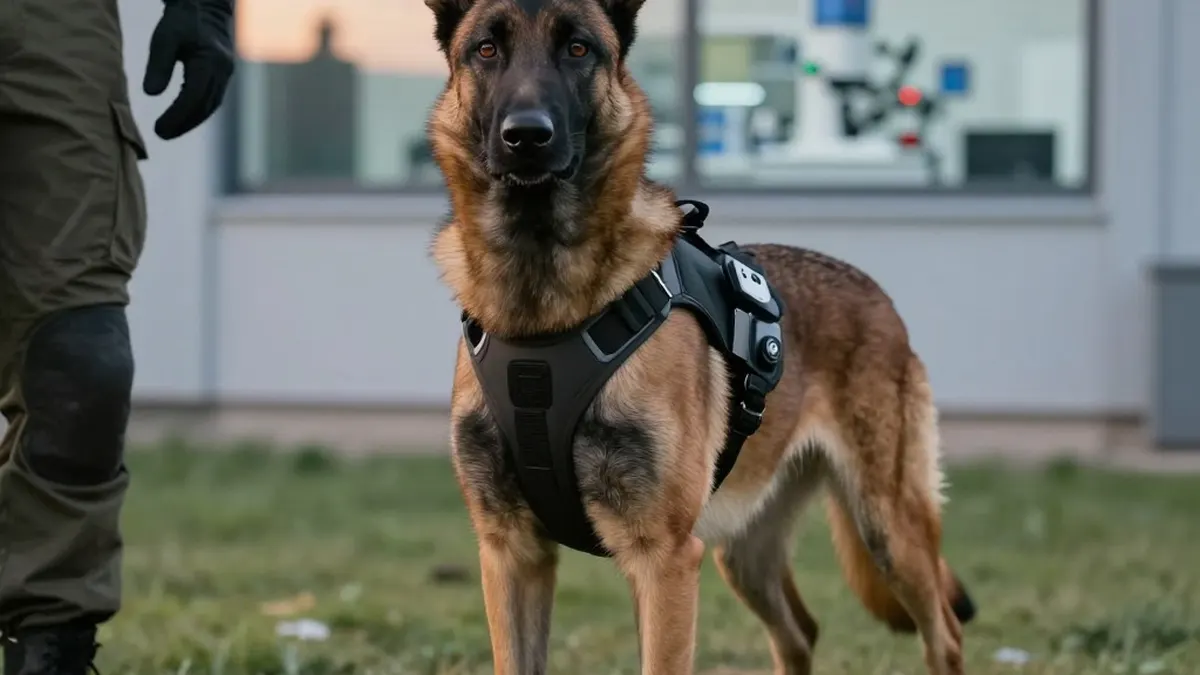
Lamm believes the animals can be improved for health and longevity, and for traits such as speed, agility and a sharper sense of smell for detecting explosives. His team has studied the Belgian Malinois and German Shepherd, two top-performing breeds, and stored cell lines from them in a biobank. The team plans to edit the dogs' genes, adding ones that improve performance and removing ones that do not, to produce what Lamm called "a new type of dog."
Anduril will contribute software and hardware, including protective vests and goggles, to help dogs and handlers with situational awareness and coordination. Lamm described vests with data sensors that relay information to handlers. These additions, he said, go "on top of the dog, not in the dog." He added that the aim is for safer, healthier, better-performing dogs, and that the changes should also better protect their human handlers.
Luckey is a partner in the venture but holds no equity, Lamm said. Colossal owns equity and supports the business by licensing its technology. Colossal is best known for efforts to bring back extinct animals such as the dodo and the mammoth.
Lamm said the first batch of dogs is about to be cloned and incubated, with births expected early next year and service ideally starting within two years. Viagen, another Colossal-owned company, will partner with Warhound on cloning. Lamm said its technology has a high success rate and is already used in Colossal's work to protect endangered species.
Pricing has not been set, but Warhound expects to sell to first responders, the Department of Defense, military service groups and police forces. On government approval, Lamm said the company has briefed many government groups. On civilian safety, he said each dog will be trained like any military working dog and managed by its buyer.
Warhound said it is working under the guidance of the American Humane Society to help certify its training program, and hopes retired dogs will enter the society's Military Working Dog Reunification Program. The society said it applauds the companies for inviting it "to have a seat at the table" and looks forward to helping ensure the animals are treated humanely.