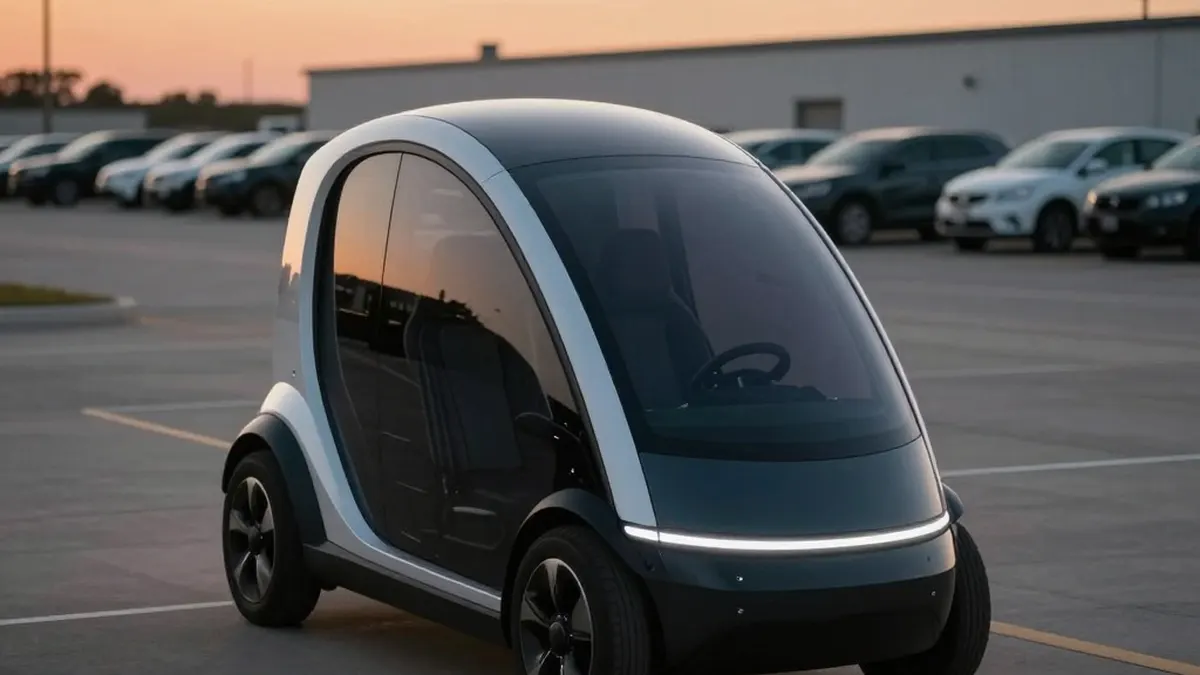
Tesla said during its third-quarter earnings call on 21 October that it aims to deliver its Cybercab to customers before the end of 2026. The timeline sits awkwardly beside the company's separate target for releasing unsupervised self-driving software to customer vehicles, which falls roughly six months later.
The topic came up when an analyst asked when customer cars would receive unsupervised Full Self-Driving (FSD). Tesla's answer shifted from the "end of next year" line it has repeated annually for about a decade to "middle of next year," meaning the second quarter of 2027.
Such a release would be a major jump. Tesla's current system is classed as Level 2, and only Levels 4 and 5 count as truly unsupervised. Level 3 still requires a driver in the seat who is ready to take over at any moment.
In the same exchange, Lars Moravy, Tesla's vice president of engineering, said the company is trying to get Cybercabs to customers by the end of 2026, within about two months of the call. He said Tesla is producing many of the vehicles in Texas but that all of them are going into its own internal Robotaxi fleet. As the company grows, he said, it will mainly deliver fully designed autonomous vehicles to customers, with the Cybercab the first. Tesla will start small this year, he added, and learn about delivery, ownership and fleet management before scaling up.
CEO Elon Musk added that Cybercabs would mostly be Tesla-owned transport-as-a-service vehicles. That appears to sit uneasily with a call for Cybercab fleet buyers that Tesla issued the same day as its Cybercab launch event.
The timelines leave a gap. The Cybercab is designed without a steering wheel or pedals, so a customer taking delivery in late 2026 would, on the stated schedule, have no software to drive it until the second quarter of 2027. Without a wheel, the owner could not even steer it by hand into a driveway.
One way around the problem would be to deliver Cybercabs with steering wheels. Another would be to restrict them to the areas where Tesla's Robotaxi service already operates. That service is far smaller than Musk once forecast. He predicted Robotaxis would cover half of the US population by the end of last year, yet the service is currently available only in small parts of six cities across two states.
Customers could in theory run Cybercabs in those same areas if Tesla gave them access to the software it uses itself, something it has long promised. But Tesla said on the same call that it will not provide that access to the public, even in areas where it already operates, until the second quarter of 2027.
Taken together, Tesla's statements point to a period of several months in which customers could receive a Cybercab they have no sanctioned way to use. Alternatively, the timelines may simply prove to be estimates that shift again.