Tesla now expects to begin delivering its Optimus humanoid robots to outside customers around the end of 2027, CEO Elon Musk said on the company's third-quarter 2026 earnings call. He acknowledged that the robot's hands, its durability and its AI all need further work before that can happen.
Musk said early production of Optimus has begun on a high-volume line at Tesla's Fremont facility, the site where the Model S and Model X were once built. Most of a line designed to produce a million robots a year has been installed, he said, but reaching a pace of roughly 20,000 units a week will take at least a year, and possibly longer, because parts of the design are still changing.
He named three issues that must be resolved first: the AI, the electromechanical design, and reliability, including making sure a robot does not wear out after a month of use. Musk expects those to be addressed around the end of next year, at which point Tesla plans to supply Optimus to outside companies, beginning with industrial work that is dangerous, repetitive or needs to run around the clock.
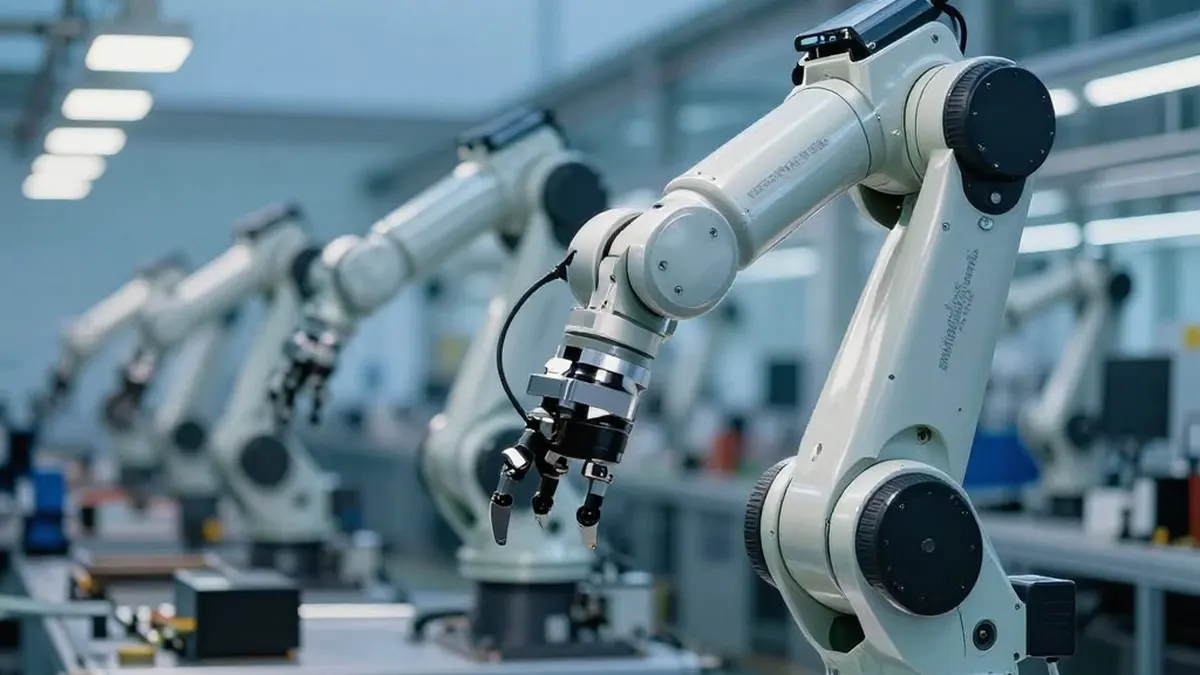
Asked by an analyst where the design was still in flux, a Tesla Optimus engineer pointed to the hand as one of the hardest hardware challenges, along with custom gears that still raise reliability concerns. Musk agreed the hand is the central problem. Fingers must be soft enough to handle delicate objects yet survive constant wear, he explained, and robots cannot heal the way human skin does.
On the software side, Musk said Tesla is still working through problems with the AI architecture. Unlike its cars, which feed data back for its FSD driving system, Tesla has no fleet of robots gathering real-world data. The company plans to build 10,000 to 20,000 robots to practice tasks in what it calls an Optimus Academy, and to install its AI5 chip in Optimus around April 2027. Musk also promised a video within a month or two showing the robot performing tasks that are not pre-programmed, arguing that many humanoid demonstrations rely on scripted routines.
The problems echo earlier reporting. Electrek reported last month that Tesla had ramped Optimus to hundreds of units a week but that the robots could not generalize to new tasks. Citing The Information, it said the hand and forearm contained more than 100 small parts assembled by hand, touch sensors had reliability issues, and the AI could take days to learn basic tasks. Tesla's Q3 shareholder letter describes the robots now leaving the Fremont line as "the first production-quality bots that we have manufactured."
The timeline has also repeatedly slipped. In 2024, Musk said Tesla would build Optimus for internal use in 2025 and hopefully in high volume for other companies in 2026. In January 2025, he said the company would build about 10,000 robots that year, with "several thousand" doing useful work by year-end, and he later admitted none were.
Musk said that, to the best of his knowledge, "there is no one that is even close to Tesla" in general-purpose humanoid robots. Competitors suggest a tighter race. XPeng started an automated production line for its IRON robot in Guangzhou in September, with more than 80% of core processes automated. Each IRON hand has 21 degrees of freedom, and the robot runs on three in-house Turing chips. XPeng targets mass production by the end of 2026 and deliveries in the first half of 2027, though it has not yet shipped IRON to a paying customer and its own timelines have slipped.
Hyundai's Boston Dynamics began producing its electric Atlas in January and says all its 2026 deployments are already committed, including to Google DeepMind. In September it opened a robot training center at Hyundai's Metaplant in Georgia, where Atlas is learning to sequence car parts for assembly. Hyundai plans to deploy 25,000 robots across its plants in the next few years. Boston Dynamics has also favored sturdy industrial grippers over human-like dexterity, sidestepping the hand problem Tesla says is holding it back.