Telehealth company Hims has launched a testosterone replacement therapy service for cisgender men, moving further into men's health at a moment when testosterone levels are a frequent subject of public debate.
The service will provide two kinds of injectable treatment and an oral pill. Patients become eligible for a prescription after completing an at-home capillary blood test. Peter Stahl, a urologist and senior vice president of men's health at Hims, said the aim is to "cast as wide a net, and get as many people tested, as possible."
Hims began by selling erectile dysfunction medication in 2017 and has since added women's health products. It is now publicly traded and has served 2.9 million customers. Stahl described the new offering as a sign of maturity for the company. "When we first started, we didn't have the capabilities to take care of a complex condition like testosterone deficiency," he said. "We've finally grown up."
The company enters a crowded field of online clinics selling testosterone therapy, many of which launched in recent years on turnkey telehealth platforms. Numerous such services pitch the drug as a lifestyle booster or anti-aging remedy. Stahl, by contrast, regards testosterone deficiency as a medical condition that is "really underdiagnosed" and "really misunderstood." He pointed to the stigma left by the 1990 Anabolic Steroids Control Act, which made testosterone a controlled substance, and to older research linking the therapy to cardiovascular risk, which more recent findings suggest was overstated.
The topic has also taken on a political edge. Defense Secretary Pete Hegseth announced this fall a mandatory testosterone deficiency screening for most male US service members, and Texas Republicans have used "low T" as an insult questioning masculinity in the Senate race between Ken Paxton and James Talarico. A summer survey of 2,000 American men commissioned by Hims found growing openness to discussing testosterone treatment, though stigma remains around using medication for low levels.
Because testosterone is a controlled substance, it cannot be prescribed as easily as GLP-1 drugs or estrogen-based hormone therapy, which clinicians often prescribe after a short questionnaire. TRT requires "synchronous" care, meaning a video consultation with a clinician before a prescription is issued and during continuing monitoring. Urologist Mohit Khera of Baylor College of Medicine noted that the therapy can cause infertility and should not be given to men trying to conceive. He sees telehealth as a promising way to widen access, "as long as it's monitored appropriately."
Diagnosis of hypogonadism does not rest on lab results alone. Clinicians weigh bloodwork against symptoms, such as sexual dysfunction and muscle loss, and medical history. Stahl called testosterone a "powerful biomarker" and said men with low levels face a 35 percent higher risk of overall mortality.
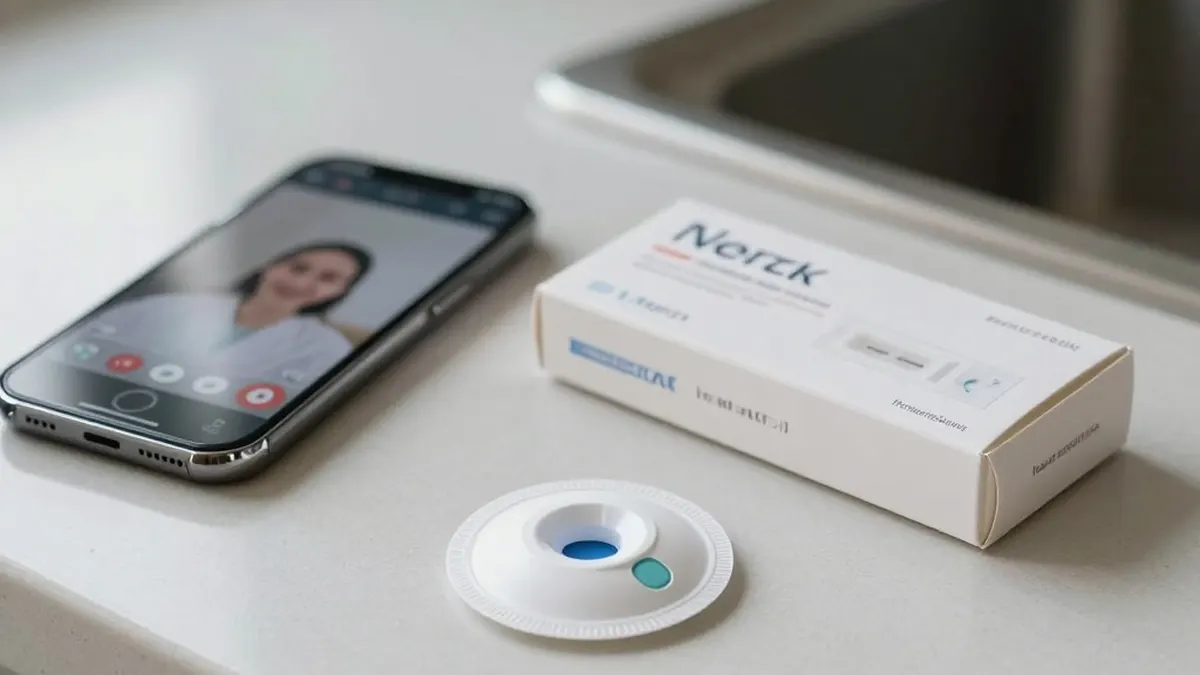
Instead of a standard blood draw, Hims will send a Tasso device, a single-use wearable that attaches to the upper arm and uses microneedles to collect a small sample. The article notes that Tasso devices have a solid track record. A lab then analyzes 21 biomarkers, including triglycerides and thyroid hormones as well as testosterone. Depending on the results, patients might receive compounded or commercially available injectable testosterone, an oral pill, or another course of action if levels are not low. Stahl said testing could draw in men who would otherwise avoid doctors: "Getting screened for testosterone deficiency is much more exciting to a young man who's feeling good than getting tested for high cholesterol."
The launch comes as online testosterone sales remain loosely policed. In 2022, urology researchers posing as patients found that six of seven digital platforms offered TRT even though reported hormone levels were normal. Stahl said Hims will be stricter: "If you're asymptomatic, it doesn't matter what your testosterone level is, you're not going to get treated on our platform."