Samsung Electronics and SK Hynix, the world's two largest makers of NAND flash memory, are reportedly working to upgrade their factories in China so they can produce more advanced chips for AI data centers. Reuters reported the plans, which come as the South Korean companies face growing competition from fast-rising Chinese memory makers such as CXMT.
Competition in the lucrative market for AI memory has already led manufacturers to cut back production of consumer-focused components. That frees up capacity for the more advanced and more profitable parts that data centers need.
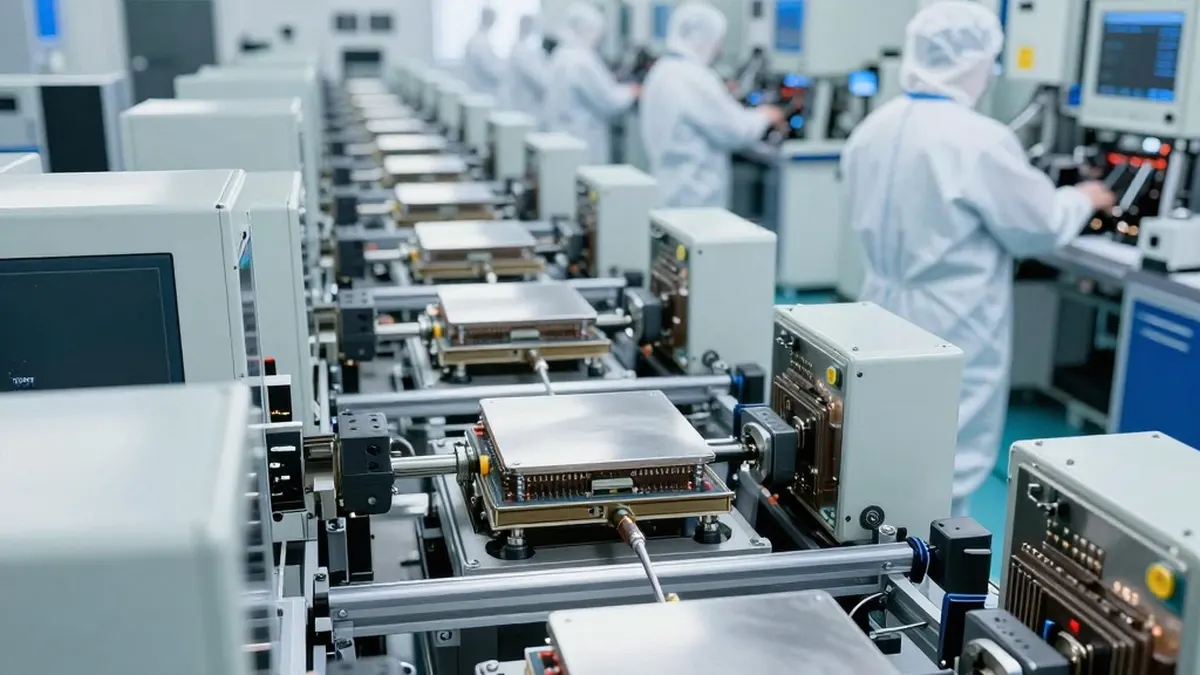
Citing four people familiar with the matter, the report says Samsung plans to convert its Xian plant to 286-layer flash chips by the end of the year. The factory currently makes chips with around 200 layers, and the upgrade is aimed at Samsung's V9 NAND. Xian accounts for roughly 40% of the company's global NAND output.
SK Hynix is aiming slightly lower at its Dalian facility, which it took over in 2021. The plant currently produces 192-layer chips, and the company is targeting chips with 240 or more layers. Three people familiar with the plans reportedly confirmed that goal, but no timeline for the upgrade has been made clear.
Both companies face an extra hurdle in U.S. regulation. Export controls on chipmaking equipment, introduced in 2022 to slow China's technological progress, now require the two South Korean firms to obtain licenses before installing U.S.-built hardware in their Chinese plants. Samsung and SK Hynix say they are working in consultation with U.S. authorities, but the added step has likely slowed their efforts to meet the surge in demand for AI memory.
The report points to those restrictions as one reason for the recent growth of Chinese competitors such as Yangtze Memory Technologies Co. (YMTC). The company reportedly told investors at a recent meeting to prepare for its IPO that it aims to become the world's largest NAND flash producer by the end of 2027.
CXMT, China's leading memory chipmaker, is also widening its ambitions. A report in September 2026 said the company, already the country's largest DRAM producer, was looking at making 3D NAND memory for solid-state drives. In the first half of 2026 it posted revenue of $22.41 billion and net profit of $11.57 billion, a turnaround after years of losses.
Despite those results, CXMT remains considerably smaller than Samsung, SK Hynix and Micron. The upgrades planned for Xian and Dalian suggest the two established leaders intend to keep their lead in advanced memory, even as they work within the limits set by U.S. export rules.