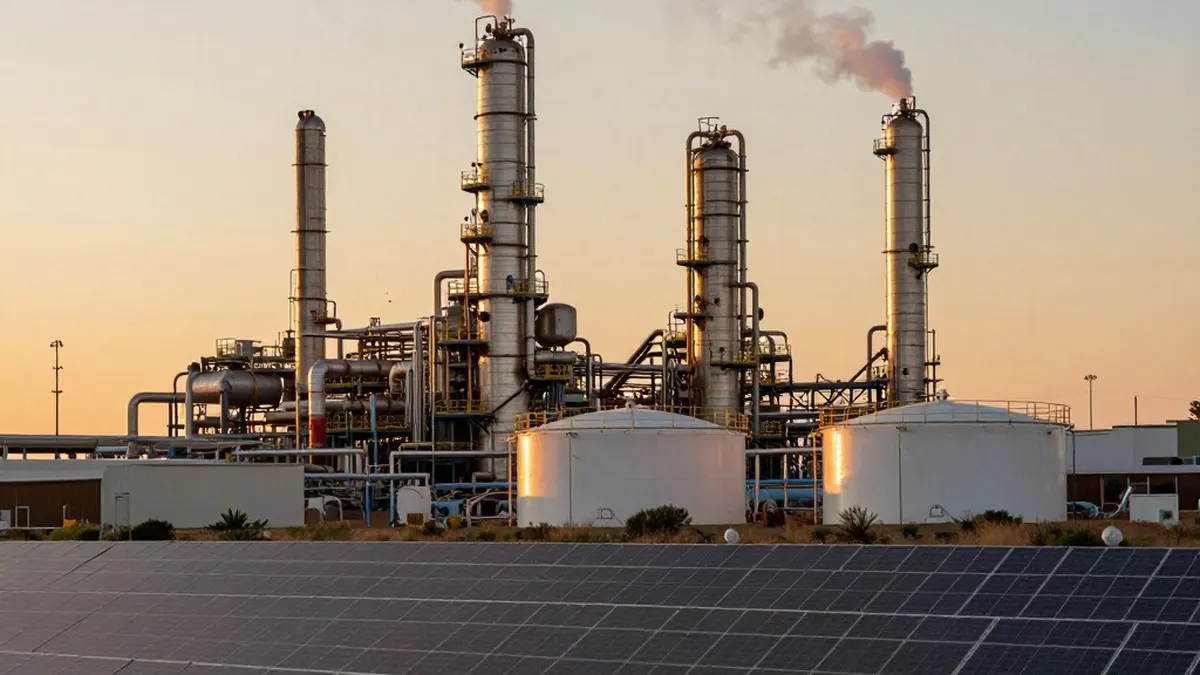
Rio Tinto is exploring a way to use Australia's inexpensive midday electricity to power an alumina refinery after dark, by storing it as heat in bricks. The mining company and California-based Rondo Energy have started engineering and design work on a large heat battery near Gladstone, Queensland, at the Yarwun alumina refinery.
Rondo describes the project as the largest planned thermal energy storage installation in Australia and says it would be the first of its kind in the alumina industry. The project remains at the study stage.
Alumina is a hard white powder made from aluminum and oxygen. It is used to produce aluminum metal, as well as sandpaper and strong ceramics. According to the source, refining in the aluminum sector accounts for roughly 175 million tonnes of carbon dioxide equivalent each year worldwide.
Rondo's system works by using electricity to heat refractory bricks, which are able to withstand very high temperatures. The bricks retain the energy as heat, which is then used to make steam for the refinery's existing steam network. Because the battery charges when power is cheap and plentiful, it can keep supplying heat continuously even when solar output falls, which matters because industrial heat demand does not pause at sunset.
At Yarwun, the proposed system would provide 360 megawatt-hours of thermal storage and deliver up to 30 megawatts of heat. The Australian Renewable Energy Agency (ARENA) lists its electrical charging capacity at 78 megawatts, meaning it can absorb electricity faster than it releases the stored energy as heat.
Rio Tinto estimates the battery could meet about 5% of Yarwun's steam needs and reduce the refinery's direct emissions by around 67,000 metric tons of carbon dioxide a year, displacing some of the coal and natural gas now used to generate steam. Because the battery would connect to equipment the refinery already operates, the study will test whether it can deliver reliable high-pressure steam at a sensible cost.
"This project shows how Australia's abundant energy can become a competitive advantage for industry," said Dr. Kira Rundel, Rondo's head of Australia. "Heat batteries allow manufacturers to use low-cost electricity to produce the reliable, round-the-clock heat their operations need."
ARENA is contributing an initial A$3.6 million to the engineering and design study, and Rio Tinto will match that amount. If the project proceeds, the agency would provide up to A$38 million for deployment, with a further A$33.3 million available as contingency support. Rio Tinto says its own total investment over the project's life is expected to exceed ARENA's funding if deployment goes ahead.
Armando Torres, managing director of Rio Tinto Pacific Operations, said cutting emissions from alumina refining is complex, particularly when it comes to generating the high-pressure steam the operations require. "This study will help us determine whether thermal energy storage can provide a technically and economically viable alternative to fossil fuels for part of Yarwun's steam requirements," he said. The feasibility study is expected to take about 12 months.