
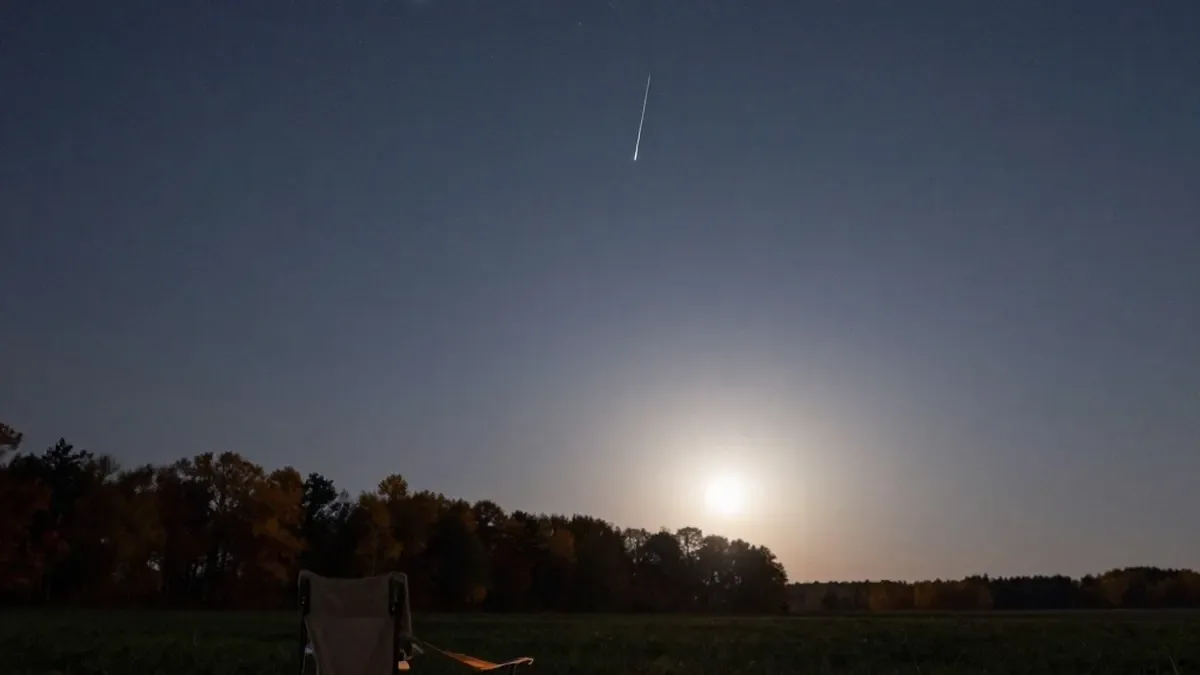
The Orionid meteor shower reaches its peak on the night of Oct. 21-22, when fragments shed by Halley's Comet burn up in Earth's atmosphere and trace bright streaks across the autumn sky. Skywatchers, however, may have to contend with moonlight that could wash out part of the display.
The peak occurs as Earth passes through the densest part of the debris trail left behind by Comet 1P/Halley. The comet is currently on its way back toward the sun and is due to return to the inner solar system in 2061.
Under ideal dark-sky conditions, NASA says observers could see roughly 10 to 20 meteors per hour at the height of the shower. This year, the waxing moon is just four days from full, and its glow is expected to reduce the count by obscuring the fainter Orionids.
The meteors appear to fan out from a radiant point near the red star Betelgeuse in the constellation Orion. For viewers in the United States, that region of the sky climbs above the eastern horizon about an hour before midnight.
The best opportunity to catch the fast-moving meteors will come in the hours before dawn on Oct. 22. By then the moon will have set, and the radiant will be approaching its highest point in the sky.
Observers are advised not to stare straight at the radiant. Meteors close to that point have comparatively short trails because of an effect called foreshortening. Those appearing 45 to 90 degrees away from Betelgeuse tend to show longer, more striking streaks.
Practical preparation can improve the experience. Viewers should head away from city lights and allow 20 to 30 minutes for their eyes to adjust to the darkness. Anyone traveling to a remote location should tell someone where they are going, and a red light is recommended for finding the way while keeping night vision intact.
Space.com has invited readers to submit photographs of the Orionids, along with their name, location and comments, to [email protected].