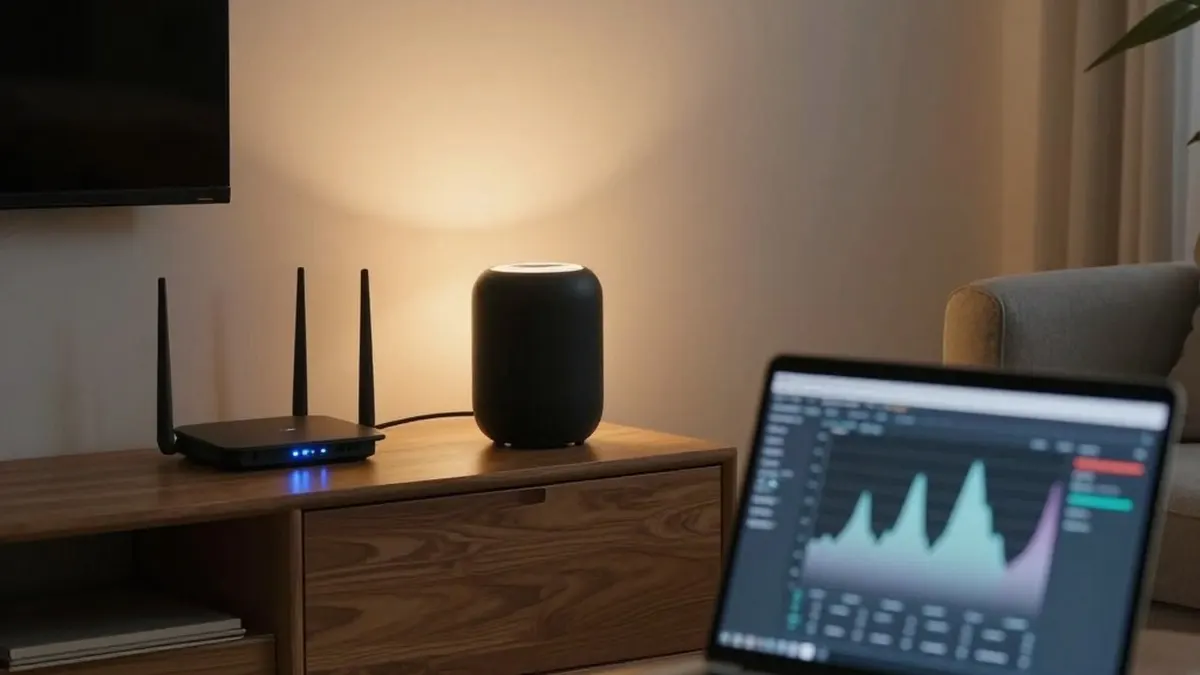
Some owners of Google's Gemini-powered smart speakers recently found that the devices were consuming far more home internet data than expected. One user reported on Reddit that his speaker had used 3 terabytes of data over about two weeks, according to coverage by 9to5Google.
A WIRED writer checked their own home network and found the same problem. Their Google Home Speaker had used 487 GB in the previous 10 days, nearly as much as the rest of the household had used from August through September.
Google acknowledged that only some devices were affected and said a fix has been rolled out. A company spokesperson told WIRED: "A server misconfiguration caused some Google Home Speakers to repeatedly download a software update. This issue has now been resolved."
The discovery led the writer and their husband to review usage for every device their router could identify, and other oddities turned up. A Ring smoke detector, listed under Amazon, had used 22 GB in the past week, roughly what one of the household's smartphones had used. A device labeled only "WATCH" had used about 21 GB over the same period, even though no one in the home had worn a smartwatch in the past year. The writer said that mystery remains unsolved.
How easily you can trace such usage depends on your equipment. The writer uses an Eero mesh system but does not pay for its subscription, so the app lists connected devices without showing how much data each one uses. Many routers put detailed information behind subscriptions or paywalls.
Asus routers offer free traffic tracking. Users can open the router's web interface at asusrouter.com, log in, and switch on the Traffic Analyzer, which refreshes hourly. The top five data-using clients appear on the Statistic tab, and live traffic can also be viewed in the Asus Router phone app.
TP-Link owners can open the Deco or Tether app, tap the Network tab and choose Traffic Usage. What appears varies by model, though some routers offer an In-depth Statistics toggle. Netgear tracks only overall traffic under Traffic Meter and cannot break it down by device. For other brands, the web interface often provides more data than the mobile app.
Another option is the internet provider's own app. The writer used AT&T's, which shows usage for the current day, the past seven days, the current billing period or the previous three billing periods. It lists only a handful of high-volume devices rather than everything connected, but that was enough to expose the Google speaker and the Ring smoke detector as heavy users.
The writer said the episode was not a major problem for them, since they have a large Wi-Fi plan, which they described as a necessity for testing smart home products, and the bug was patched quickly. They have unplugged the speaker for now to avoid reaching their plan's 2 terabyte cap per billing period. For people whose plans charge for large downloads, or whose networks are being clogged by unidentified devices, checking usage may be worthwhile.