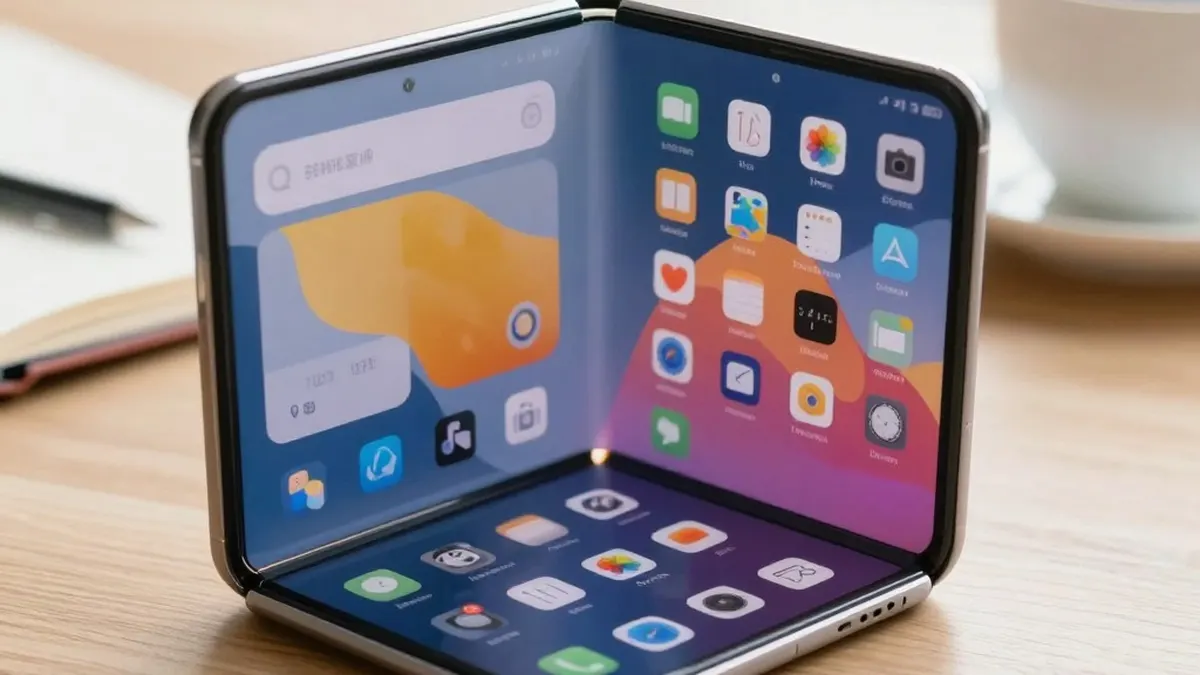
Reviews of the iPhone Duo, Apple's first foldable phone, were published on 21 October, ahead of the first customer shipments later this week. Taken together, they suggest the device is a polished debut that still runs into many of the problems Android foldables have faced for years.
9to5Mac's Chance used the phone for a week and came away "convinced that this form factor represents the future of the iPhone." The review argues the shape "just makes sense" and that there is "something special about a compact, notebook-like iPhone that unfolds into a tablet-like experience."
The inner display drew praise. Its nanotexture matte finish makes the crease far less noticeable visually. Chance stresses that the crease is still there, but says it is "almost never" noticed unless you look for it, and that it is more likely to be felt than seen. That is similar to most Android foldables.
App support is the most obvious weak spot. Many apps are not yet optimized for the new form factor, a situation that kept Android foldables stuck for years in a "phone that turns into a square tablet" mold. Oppo and Google had pursued a design like the Duo's well before Apple entered the conversation. There are signs that Apple's ecosystem is catching up faster, though. WIRED reported that "in the past day" apps including Instagram, Threads, Slack and the Google app moved navigation icons to a right-hand rail and improved their layouts for the larger screen. Michael Fisher compared unoptimized apps to the early days of the iPad but noted that key developers are already stepping up, and that smaller developers are building apps inspired by the new shape, such as "Tiny Computers."
Not every app will be updated, however. David Imel said you can scale unoptimized apps up and "they work, but they do look silly," and apps that are no longer maintained are likely to stay messy. Fisher pointed to Google Maps, which still does not fill the whole display and returns to its starting state if the phone is rotated. Fisher also said that Apple's new sidebar interface is something to love.
The outer display is another sore point. The Verge wrote that "most Duo owners will find that the cover display is simply too small to use all the time." The same review framed the trade-off with Android devices: the Duo's outer screen is not useful enough, so people want to open it constantly, while the inner screens of most Android foldables are not useful enough to give a compelling reason to open them.
Durability looks solid. Joanna Stern put the Duo through more than 32,000 folds on top of normal daily use, and the hinge held up well. Stern also found that the phone runs warm, describing it as a "hand warmer." Apple reportedly said this was normal for the device's heat management. Cooling two halves of a device is harder, and the heat is more noticeable when there is more usable space.
Nearly every review also remarked on the phone's heft. Android makers have trimmed weight with each generation, with Samsung's Galaxy Z Fold 8 cited as a prime example. The Duo is not as heavy as the original Pixel Fold, according to the roundup, but it sits close to the point where weight becomes noticeable.
Overall, the early verdict is that Apple has not reinvented the foldable but has brought a level of refinement that Android models often lacked. The company has a clear vision for the product, and despite some stumbles on its first attempt, the reviews describe the Duo as a good start.