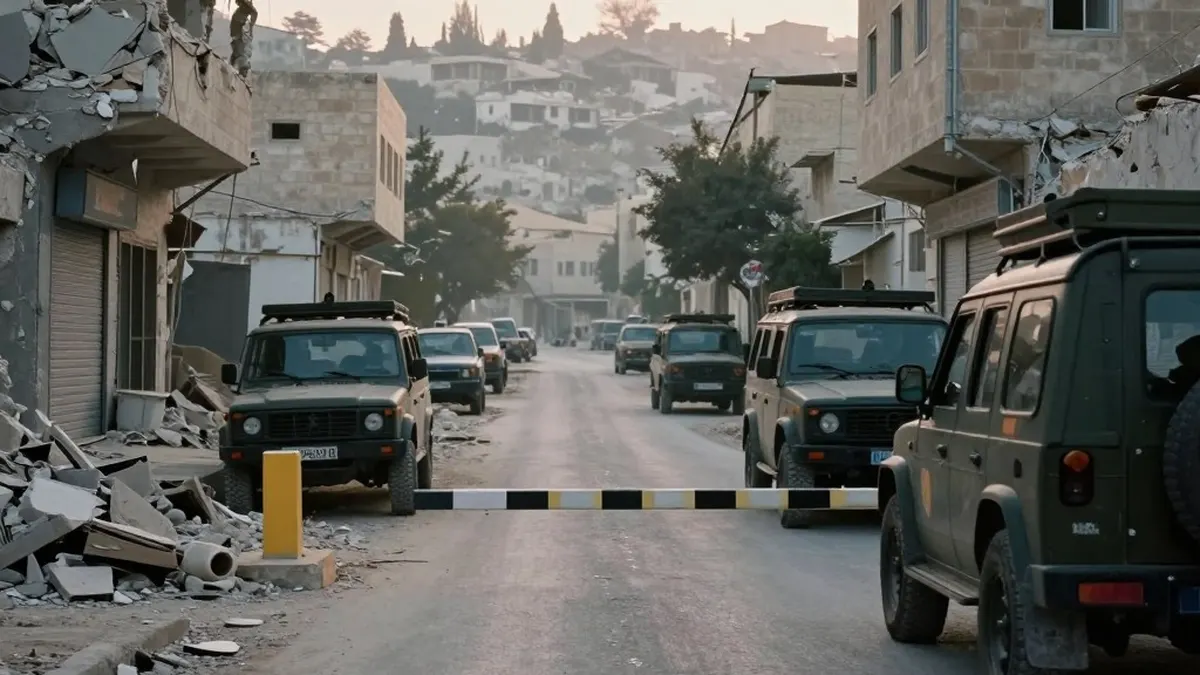
The Israeli military is working to present Friday's incident in Hebron as an encounter between combat troops and two armed men, not as a terror attack. The framing appears aimed at limiting professional criticism over how the Judea Regional Brigade, which operates under the 98th Division, prepared in advance. The military also maintains that the troops' response prevented a larger attack.
The IDF and the Shin Bet (Israel Security Agency) are still investigating which network helped the two attackers. The current assessment is that a Hamas cell carried out the operation with assistance from the organization's headquarters in Turkey.
According to the findings so far, this was not a lone attacker. An organized network reportedly helped the pair obtain a handgun, an M4 rifle and ammunition, and also trained them. The attackers studied the terrain, carried out reconnaissance and drew up operational plans, which allowed them to hold off Israeli forces for more than 20 minutes. During that time, the military could not deploy an attack drone or an aerial surveillance system against them.
The IDF stressed that the soldiers' courage should be recognized. The regional defense officer, who was caught up in the incident, and the deputy battalion commander engaged the attackers directly and killed them.
The episode raises questions about intelligence. The network operated without being detected by IDF and Shin Bet intelligence officials, even though there had been a general warning that Hamas intended to carry out attacks in the area ahead of elections scheduled for this coming Tuesday.
Over the past 24 hours, IDF and Shin Bet forces have arrested several Palestinians suspected of helping the attackers, or at least of knowing an attack was being prepared. The suspects were handed to the Shin Bet for questioning, and more arrests are expected.
IDF Central Command chief Maj. Gen. Avi Bluth said the military served as a protective barrier shielding the civilian population from terrorism. Prime Minister Benjamin Netanyahu and Defense Minister Israel Katz, for their part, spoke of offensive operations.
Tensions in the West Bank are rising, and the IDF has added a divisional headquarters, the 98th Division, to strengthen command and control in violent hotspots and areas facing an immediate threat. Against that backdrop, the report asks what the military has actually accomplished so far.
In a separate move, the IDF demolished illegal structures in the Hebron area. The demolitions had been planned beforehand and were unrelated to the attack. Troops searched 200 buildings in Hebron and found no weapons, ammunition or militant infrastructure. According to the defense minister, about 2,000 residents were evacuated. The report notes that they are expected to return home soon, and that the evacuation was meant to protect them from possible clashes during the searches.
The report argues that Hebron needs a new and effective approach, since it poses different challenges from the refugee camps in Jenin, Tulkarm and Nablus. Such an approach would be needed both to head off copycat or inspired attacks and to dismantle organized networks. The two attackers came from a very large Hebron clan, one of whose members was freed in the Gilad Schalit prisoner exchange deal. The threat of further attacks remains.