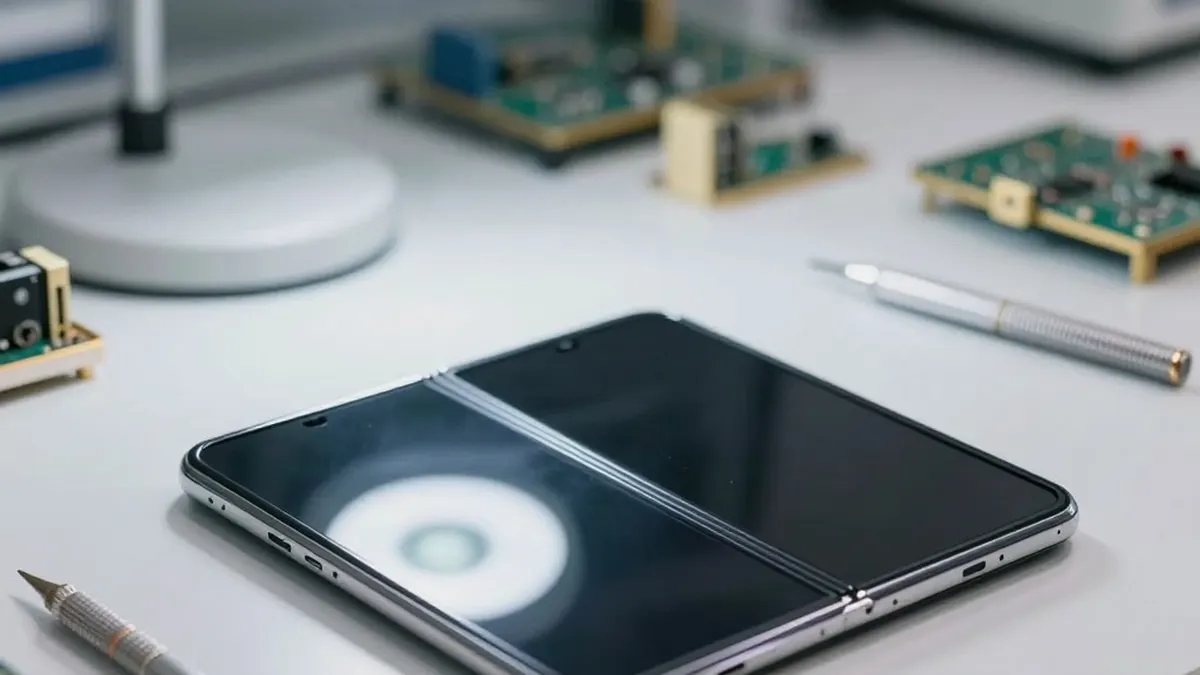
Apple is reportedly already working on the follow-up to its foldable iPhone Duo, with early prototypes said to include Face ID. The claim comes from Mark Gurman, who shared it on his Power On podcast.
According to Gurman, the prototypes of the iPhone Duo 2 being tested inside the company integrate the Face ID sensor under the display of the outer screen. The first-generation phone is due to go on sale on 2026-10-23, and strong pre-order demand suggests it is shaping up as a hit. A second-generation model is widely expected next fall, so work on the next hardware would already need to be underway.
The absence of Face ID on the current model has drawn some of the sharpest criticism from early reviewers, who noted that Apple moved to Touch ID for this device. 9to5Mac's Chance Miller described the change as "the hardest thing to get used to" with the new foldable.
Fitting Face ID into the phone's very thin enclosure appears to have been the obstacle for the first generation. Apple has, however, been shrinking the technology and making it less intrusive, as demonstrated by the under-display infrared camera on the iPhone 18 Pro.
The iPhone Duo 2 and the twentieth anniversary iPhone Pro could take that further. Both the infrared camera and the flood illuminator may move behind the screen, which would allow an even smaller bezel or Dynamic Island cutout.
Testing the technology on prototypes does not guarantee it will appear in next year's model. Still, the effort suggests that is Apple's goal, and buyers could expect Face ID either in the second generation or in an iPhone Duo 3 if development runs late.
Gurman also said on the same episode that Apple employees have been exploring ways to bring the Action button to a future iPhone Duo. He was reportedly less confident about that feature than about Face ID.
It also remains unclear what would happen to the current Touch ID sensor in the power button if Face ID is added. Apple could remove it, or it could keep both biometric methods so that users can authenticate whether they are looking at the inner or outer display.