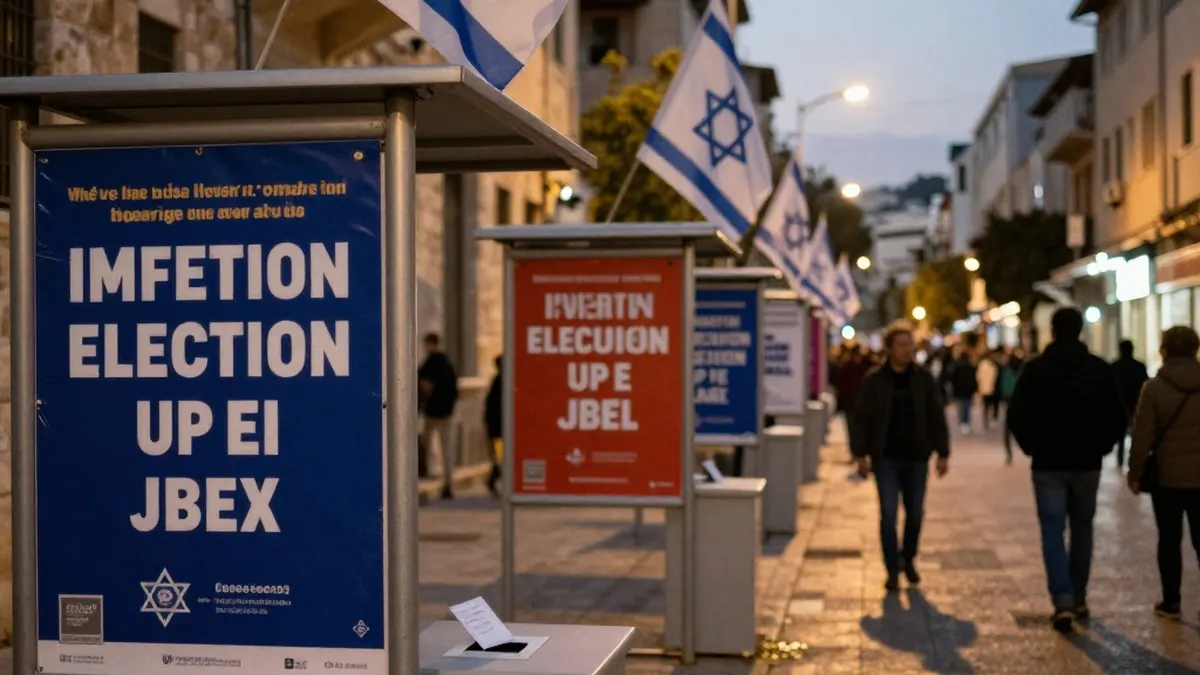
Two days before Israel votes, Prime Minister Benjamin Netanyahu is stepping up efforts to win further backing from US President Donald Trump, who offered him a striking public endorsement last week. Two American sources told The Jerusalem Post that Trump is under particularly heavy pressure from Netanyahu himself and from several of the prime minister's allies in the president's inner circle, who want new statements of support to build political momentum.
According to the sources, some people close to Trump have repeatedly raised Netanyahu and the Israeli election with him, hoping he will keep backing the prime minister publicly through the final days of the campaign. American sources familiar with Israeli public sentiment described the push as unusually intense. "We have never seen Netanyahu like this before. He is showing signs of political desperation," they said.
The account matches a report published Sunday by Axios, which said Netanyahu spoke with Trump twice over the past three days and asked for additional statements of support. The report said Netanyahu even proposed wording for new endorsements. An Israeli source briefed on the efforts told Axios the prime minister also suggested Trump speak with Israeli journalists to repeat his support.
Last week, after months without an explicit endorsement, Trump posted on Truth Social that Netanyahu had his "complete and total endorsement." He called Netanyahu a "great warrior prime minister" and a key partner in the struggle against Iran. Trump also hinted at consequences for the relationship if Israelis chose differently. "If Israel has the wrong leader, meaning anyone other than Bibi, America will have to do this job itself, and I'm not inclined to do that," he wrote, referring to the confrontation with Iran.
Not everyone in the administration has followed his lead. Vice President JD Vance said last week that he does not plan to endorse Netanyahu or intervene in the vote. "I'm not attacking Bibi Netanyahu. I'm not endorsing Bibi Netanyahu," he said, adding that the president's endorsement is what ultimately matters. Vance said the only foreign candidate he has ever endorsed was former Hungarian prime minister Viktor Orbán, who lost the election in April, and that he will concentrate on the US midterms.
A senior State Department official told the Post that Washington keeps in contact with a wide range of Israeli stakeholders and looks forward to working with the government formed after the election. "We look forward to continuing our close partnership with Israel's post-election government on shared priorities," the official said, adding that normalization between Israel and its neighbors remains an administration priority.
The Post reported that senior Trump advisers believe a different Israeli government could make it easier to advance the president's goals in the Middle East. Envoys Steve Witkoff and Jared Kushner have voiced frustration over difficulties implementing the Gaza plan, while envoy Tom Barrack has reservations about some Israeli actions in Syria. State Department officials think Israel could do more to strengthen the Lebanese government and curb settler violence in the West Bank. Some officials also see more flexibility for regional agreements in a government without Netanyahu's far-right partners.
Similar views are heard outside the administration. Investor Bill Ackman called Sunday for a government without Itamar Ben-Gvir and Bezalel Smotrich, arguing the two ministers have badly damaged Israel's international standing and that excluding them could expand the Abraham Accords and improve ties with both US parties.
For the White House, the vote could shape not only who leads Israel but also the future of American initiatives, including the war with Iran, the Gaza reconstruction and demilitarization plan, and a wider Abraham Accords. Israeli polls currently project Gadi Eisenkot winning an average of 23 seats against 20 for Netanyahu's Likud, which holds 32 seats now and could lose as many as 17.